Robotic rovers have become the workhorses of planetary exploration. From the dusty plains of the Moon to the rocky deserts of Mars, these vehicles extend human reach into environments too hostile for astronauts to explore continuously. But while lunar and Martian rovers may look similar at first glance, they are engineered for dramatically different worlds.
Here’s what truly separates lunar surface rovers from Mars rovers.
1. The Environment: Airless Moon vs. Thin Martian Atmosphere
The most fundamental difference lies in the environments they operate in.
The Moon has no atmosphere. There is no air, no weather, and no wind. Temperatures swing wildly—from about +127°C (260°F) during the day to –173°C (–280°F) at night. Without an atmosphere to scatter light, shadows are extremely dark and sharp.
Mars, by contrast, has a thin atmosphere composed mostly of carbon dioxide. While it is less than 1% the density of Earth’s atmosphere, it still creates wind, dust storms, and weather patterns. Temperatures on the Mars are cold but generally less extreme than the Moon’s lunar night.
These environmental differences heavily influence rover design.
2. Power Systems
Lunar Rovers
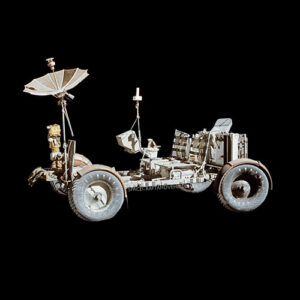
The crewed Lunar Roving Vehicle, used during the Apollo missions, relied on non-rechargeable batteries. Because astronauts only stayed on the Moon for a few days, long-term survival through the lunar night wasn’t necessary.
Modern robotic lunar rovers typically use solar panels, but surviving the two-week-long lunar night remains a major challenge. Many lunar missions end when temperatures plunge after sunset.
Mars Rovers
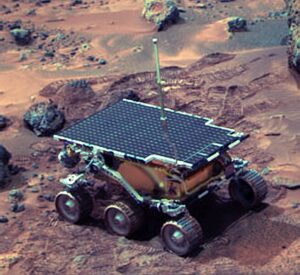
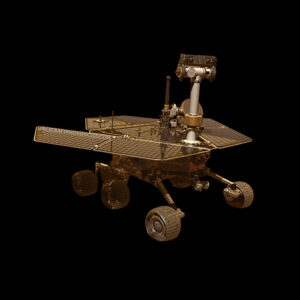
Mars rovers must survive for years. Early missions like Spirit and Opportunity relied on solar panels. However, dust accumulation and storms limited their lifespan.
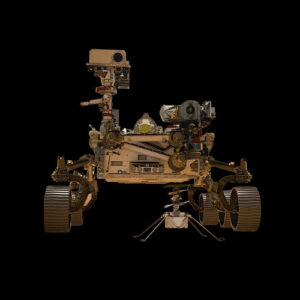
Newer rovers such as Curiosity and Perseverance use nuclear power systems (RTGs), allowing them to operate day and night, through dust storms and winter seasons.

Apollo Lunar Rover
Explore the innovative Apollo Lunar Rover, a pioneering electric vehicle that revolutionized lunar exploration during the Apollo missions.
Opportunity (Mars Exploration Rover)
Explore the incredible legacy of Opportunity, NASA’s Mars Exploration Rover, which revolutionized our understanding of the planet’s history.

Spirit (Mars Exploration Rover)
Explore the remarkable journey of Spirit, NASA’s Mars Exploration Rover, which revolutionized our understanding of the Red Planet’s geology.

Perseverance (Mars 2020 Rover)
Discover Perseverance, NASA’s Mars 2020 Rover, exploring the Red Planet’s ancient landscapes, searching for signs of past life.
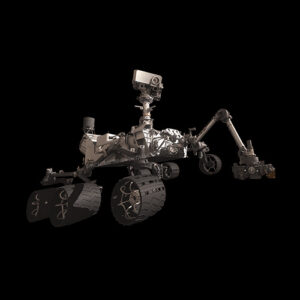
Curiosity (Mars Science Laboratory Rover)
Explore Curiosity, NASA’s Mars Science Laboratory Rover, which revolutionized our understanding of the Red Planet’s geology and climate.
3. Communication with Earth
The Moon is only about 384,400 km away from Earth, allowing near-instant communication. Lunar missions can be controlled almost in real time.
Mars, however, is millions of kilometers away. Communication delays range from 4 to 24 minutes one way, depending on planetary positions. That means Mars rovers must operate with a high degree of autonomy, making their own navigation decisions and hazard avoidance calculations.
4. Terrain and Gravity
The Moon’s gravity is about 1/6th of Earth’s, while Mars has about 38% of Earth’s gravity.
Lower gravity on the Moon allows lighter vehicles but increases the risk of wheel slippage in fine lunar regolith. The Apollo Lunar Roving Vehicle was lightweight and open-framed because it didn’t need to withstand atmospheric forces.
Mars rovers must contend with rocks, sand traps, slopes, and dust. The thin atmosphere also means parachutes can be used during landing—something impossible on the Moon.
For example, Perseverance landed using a complex “sky crane” maneuver, deploying a supersonic parachute before lowering the rover by cables. Lunar landings rely entirely on powered descent engines.
5. Scientific Objectives
Lunar Rovers
Lunar missions focus on:
- Geological sampling
- Studying the Moon’s formation
- Mapping potential water ice deposits
- Preparing for future human bases
Because the Moon is close to Earth, it is also considered a testing ground for long-term human exploration technologies.
Mars Rovers
Mars missions aim to:
- Search for signs of ancient microbial life
- Study climate history
- Analyze rock chemistry
- Prepare for eventual human missions
The scientific goals on Mars are heavily focused on astrobiology—something not applicable to the Moon.
6. Longevity and Mission Duration
Lunar surface missions historically lasted days. Future robotic missions may aim for months, but surviving the extreme lunar night remains a technical hurdle.
Mars rovers are designed for years of operation. Opportunity operated for nearly 15 years before being silenced by a global dust storm in 2018. Long-term durability is a core design requirement for Martian exploration.
7. Dust: A Shared but Different Problem
Both worlds present dust challenges, but in different ways.
Lunar dust is sharp and abrasive due to the lack of weathering. It clings electrostatically and can damage seals and equipment.
Martian dust is finer and can coat solar panels, reducing power generation. Massive dust storms can engulf the entire planet, temporarily blocking sunlight.
The Bigger Picture
Lunar and Mars rovers may share wheels, cameras, and robotic arms, but they are fundamentally different machines built for distinct environments and mission goals.
The Moon serves as a nearby laboratory for testing technologies and preparing for human return missions. Mars represents a deeper frontier—one where questions about life beyond Earth drive exploration.
Together, these robotic explorers continue expanding humanity’s reach across the solar system, each designed precisely for the world it calls home.