The Korabl-Sputnik 1 (Vostok 1KP) Mission (May 1960)

Korabl-Sputnik 1, also known as Vostok 1KP (or 1P), was the first prototype of the Vostok spacecraft, not intended to be recovered.
The Vostok 1 Mission (April 1961)
The first human spaceflight, carrying Yuri Gagarin into orbit on April 12, 1961, making him the first human in space.
R-7 Semyorka Rocket

The R-7 Semyorka was a Soviet intercontinental ballistic missile (ICBM) developed during the Cold War. It launched Sputnik 1.
How Big Is The Starship? A Look Into SpaceX’s Sizes

SpaceX’s Starship stands out as a behemoth in the realm of space exploration. But how big is it? And how does it compare to other rockets?
But Is It Reusable? All Rockets And Their Capabilities
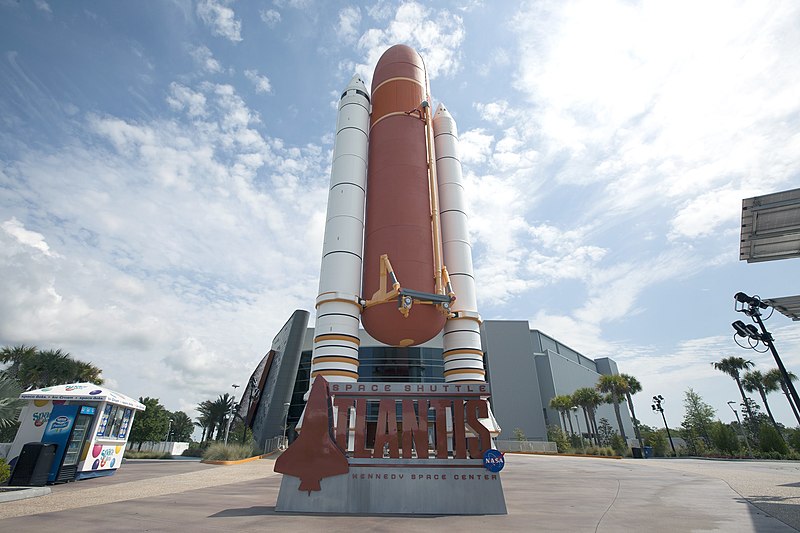
For decades, rockets were used once and then left to burn up or crash. Not anymore! But which of the ones we use today are actually reusable?
Long March 3 Rocket

This variant specializes in high-energy missions such as geostationary orbit (GEO) satellite launches and interplanetary exploration.
Long March 2 Rocket

This variant of the Long March series is notable for launching China’s first crewed spaceflight in 2003, carrying astronaut Yang Liwei.
Chinese Rockets at a Glance: All The Long March

The Long March 1 initiated China’s orbital launch capabilities in 1970. Let’s take a look at all the memebrs of this famous rocket family.
Long March 1 Rocket
The Long March 1 initiated China’s orbital launch capabilities in 1970, successfully placing the country’s first satellite into space.
Rocket Lab Ātea

The neutron is a new medium-lift, two-stage launch vehicle which will be human-rated and designed for reusability.
Rocket Lab Neutron

The neutron is a new medium-lift, two-stage launch vehicle which will be human-rated and designed for reusability.
Rocket Lab Electron

The Electron is a two-stage, partially reusable orbital launch vehicle developed by Rocket Lab. Learn about its Rutherford engines.
Space Agencies & Companies: Rocket Lab

Rocket Lab is an American aerospace manufacturer and small satellite launch service provider. Learn more about it and its spacecraft.
A Quick Guide to Rocket Propellant (Liquid Fuel, Solid, and Others)
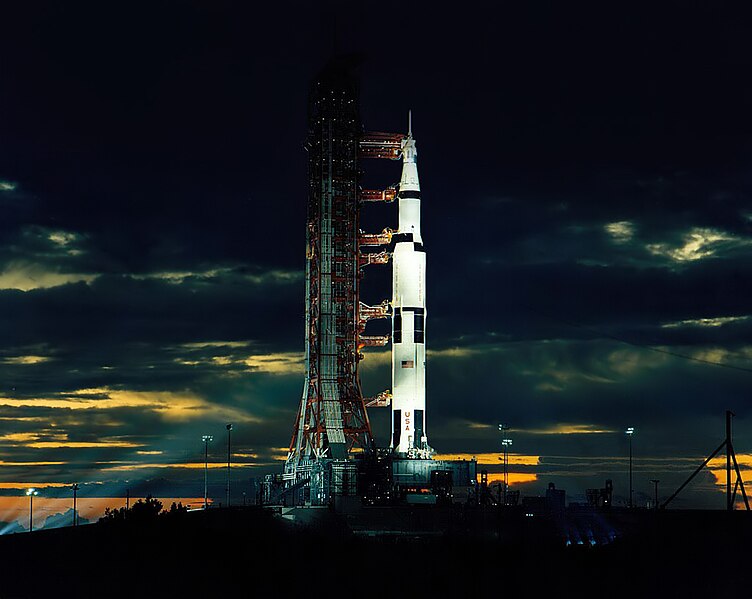
Rocket propellant is the fuel and oxidizer that powers rockets into space. Let’s take a look at the three main types.
Geostationary Transfer Orbit (GTO) vs Geostationary Orbit (GEO)

Explore the difference between Geostationary Transfer Orbit (GTO) and Geostationary Orbit (GEO), their purposes, altitudes, and shapes.
Vulcan Centaur Launch Vehicle

The Vulcan Centaur is an advanced heavy-lift launch vehicle under development by ULA and designed to succeed the Atlas V and Delta IV.
Space Agencies & Companies: Blue Origin

Blue Origin is a private aerospace company founded in 2000 by Jeff Bezos, the founder of Amazon. Learn more about its spacecraft.
What You Need to Know About Spacecraft Docking Mechanisms

Docking mechanisms might not sound glamorous, but they’re absolutely critical to modern space exploration. Let’s learn about them.
The OSIRIS-REx Mission

NASA’s OSIRIS-REx mission collected samples from the near-Earth asteroid Bennu. The material was returned in 2023.
The Mars Sample Return Mission

NASA and the European Space Agency are collaborating on an ambitious project to bring samples from Mars to Earth in the 2030s.
The Stardust Mission (1999–2006)

Stardust collected particles from the coma of comet Wild 2 and interstellar dust. Its return marked the first capture of cometary material.
Genesis Probe Spacecraft
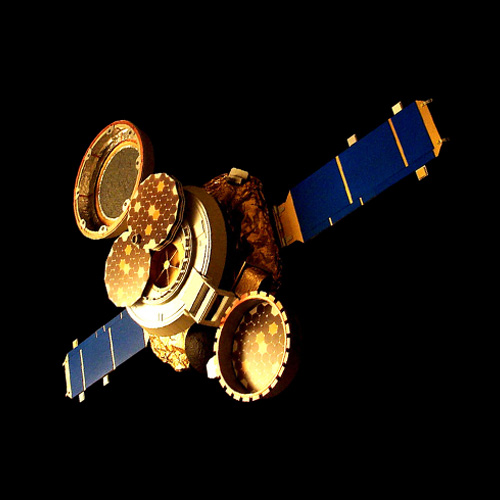
The Genesis spacecraft was a NASA sample-return mission designed to collect solar wind particles and return them to Earth for analysis.
The Genesis Mission (2001–2004)

NASA’s Genesis mission collected solar wind particles to study the composition of the Sun. It crashed but some samples were salvaged.
Axiom Space Station

Axiom Space is developing the world’s first commercial space station, known as Axiom Station. Learn more about this private enterprise.
CSA (Canadian Space Agency)

The Canadian Space Agency (CSA) is Canada’s national space organization. Learn about its missions, spacecraft, and upcoming programs.
Space Agencies & Companies: SpaceX (Space Exploration Technologies Corp.)

SpaceX is an American aerospace manufacturer and space transport services company. Find out more about its history and spacecraft.
What Is Microgravity?

In a microgravity environment, things behave very differently compared to on Earth. Here’s all you need to know to understand it.
Exploring Other Galaxies: Peering Into the Depths of the Universe

Beyond the Milky Way, our galaxy, lie countless other galaxies. Observing them requires powerful telescopes. Here is how we do it.
A Cosmic Quest: How Spacecraft Unlock the Secrets of Nebulae

Several spacecraft and space telescopes have studied nebulae, capturing stunning images and providing valuable scientific data.
The Asteroid Belt: Missions to the Rocky Remnants of the Solar System

Delve into the Asteroid Belt between Mars and Jupiter, where missions like Dawn and OSIRIS-REx have explored asteroids and returned samples.
The Sun: Spacecraft Revealing the Heart of Our Solar System

Explore the Sun and its powerful energy output through missions like SOHO and Parker Solar Probe, which study solar flares and solar wind.
Pluto and Beyond: New Horizons in the Kuiper Belt

Follow New Horizons, the first spacecraft to visit Pluto, and learn about its findings on this icy dwarf planet and other Kuiper Belt objects.
Neptune: Exploring the Distant Blue Giant

Dive into the enigmatic world of Neptune, also explored by Voyager 2, with its powerful winds, dynamic storms, and distant, icy moon Triton.
Uranus: The Icy Giant Visited by Voyager

Discover the mysterious, tilted world of Uranus, observed only by Voyager 2, and learn what we know about its icy atmosphere and moons.
Saturn: Saturn’s Rings and the Spacecraft That Studied Them
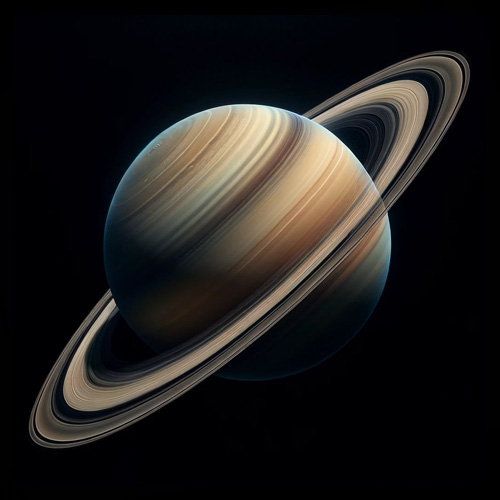
Explore Saturn, known for its stunning rings, through missions like Cassini, which provided images of the rings, atmosphere, and moons.
Jupiter: Uncovering Secrets of the Giant Planet

Learn about Jupiter, the solar system’s largest planet, explored by spacecraft like Galileo and Juno, which have revealed its uniqueness.
Mars: The Red Planet and Its Robotic Explorers

Discover Mars through missions like Curiosity, Perseverance, and the upcoming Mars Sample Return, which have been studying the landscape.
The Moon: Humanity’s First Destination Beyond Earth

Journey through the history of lunar exploration, from Apollo missions to modern probes that have mapped and studied our Moon’s surface.
Earth: Observing Our Home Planet from Space

Learn about how satellites and spacecraft provide critical insights into Earth’s atmosphere, oceans, and ecosystems, helping us understand it.
Venus: Probing the Mysteries of Earth’s Twin

Explore Venus, Earth’s “sister planet,” and the spacecraft missions—like Venera and Magellan—that unveiled its thick atmosphere and plains.
Mercury: The Closest Planet Explored by Spacecraft

Discover the extreme world of Mercury, the planet closest to the Sun, as explored by missions like Mariner 10 and MESSENGER.
New Horizons Space Probe

New Horizons is a NASA space probe launched in 2006 with the primary mission of exploring Pluto and the outer regions of our solar system.
What Is a Spacecraft, And How Is It Different From a Satellite?

When people talk about space exploration, you’ll often hear terms like “spacecraft” and “satellite” thrown around. But are they the same?
The Copernicus Program

Launched in 2014, Copernicus is designed to monitor the Earth’s environment, providing accurate, up-to-date information on the planet.
The Gaia Mission (2013-present)

The Gaia Mission, launched in 2013, is a space observatory with the ambitious goal of creating the most precise 3D map of the Milky Way.
The Rosetta Mission (2004-2016)
The Rosetta Mission was an ambitious and groundbreaking space mission led by the European Space Agency (ESA).
SLIM Smart Lander

SLIM, JAXA’s Smart Lander, demonstrated high-precision autonomous lunar landings, paving the way for future planetary exploration.
Akatsuki Venus Climate Orbiter

The Akatsuki spacecraft, also known as the Venus Climate Orbiter or Planet-C, is a Japanese space probe launched by JAXA to study Venus.
Hayabusa2 Spacecraft

Hayabusa2 is a Japanese spacecraft developed by JAXA and launched in 2014 with the mission of exploring the asteroid Ryugu.
China National Space Administration (CNSA)

The China National Space Administration is the national space agency of the People’s Republic of China. It’s in charge of space activities.