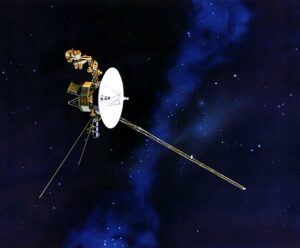
In the vast cosmic ocean, we can definitely see Voyager 1 as humanity’s most distant emissary. This spacecraft has traveled farther from Earth than any other man-made object.
Launched in 1977, Voyager 1’s primary mission was to explore the outer planets. Decades later, it still transmits valuable scientific data from interstellar space, offering humanity a glimpse into a region no spacecraft has ever sampled before.
Voyager 1: A Journey into Interstellar Space
Voyager 1 was launched on September 5, 1977, on a trajectory that would take it past Jupiter and Saturn, capturing unprecedented images and data. After completing its planetary encounters, it continued outward, eventually crossing the heliopause — the boundary where the influence of the Sun’s solar wind gives way to the interstellar medium.
In August 2012, Voyager 1 entered this uncharted realm of space, becoming the first human-made object in interstellar space. But what does interstellar space look like, and how does Voyager continue to report back on it?
How Voyager 1 Communicates With Earth
Even more than 18 billion kilometers from Earth, Voyager 1 still communicates — though not without significant challenges! At that staggering distance, its radio signal arrives at Earth incredibly faint, weaker than the energy used by a small household lightbulb and dispersed across billions of kilometers of space. It takes more than 21 hours for a single signal to travel one way, meaning engineers must wait nearly two days for a command-and-response cycle. Any instruction sent to the spacecraft must be carefully planned, transmitted through NASA’s Deep Space Network, and then patiently awaited.
1. The Deep Space Network
Voyager 1 sends data through NASA’s Deep Space Network (DSN) — a global array of giant radio antennas located in California (USA), Madrid (Spain), and Canberra (Australia). The DSN receives the faint radio signals Voyager 1 transmits back to Earth, amplifies them, and converts them into usable data for scientists.
2. Radio Signals Across Immense Distances
As Voyager 1 moves farther away, its signals become weaker. Radio waves lose strength as they travel, and it now takes over 21 hours for a message to travel one way between Earth and Voyager 1 — more than two days for a round-trip communication. Voyager’s radio transmitter operates at extremely low power — about the same as a refrigerator lightbulb — yet with sensitive receivers and long integration times, scientists can still interpret its messages.
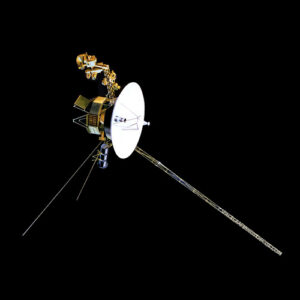
Voyager 1
Discover Voyager 1, the iconic spacecraft exploring the depths of interstellar space. Learn about its historic mission and discoveries.
What Data Does Voyager 1 Send?
Voyager 1 carries a suite of scientific instruments, many of which are still functioning. Although some were powered down over the years to conserve energy, several continue to return vital measurements:
- Plasma Wave System:
Measures the density and characteristics of particles in the interstellar medium.
In 2012, shortly after Voyager 1 crossed the heliopause, the Plasma Wave System detected oscillations caused by a solar eruption that had traveled outward from the Sun. These plasma vibrations allowed scientists to calculate the electron density of the surrounding medium, confirming that Voyager had entered the much denser interstellar medium rather than remaining inside the heliosphere. - Cosmic Ray Subsystem:
Monitors the flux of high-energy particles from outside our solar system.
For example, when Voyager 1 crossed into interstellar space, the Cosmic Ray Subsystem recorded a sharp increase in galactic cosmic rays — high-energy particles originating from supernova explosions and other energetic events in the Milky Way. At the same time, it observed a dramatic drop in solar particles, showing that the protective bubble of the Sun (the heliosphere) was no longer shielding the spacecraft. - Magnetometer:
Tracks changes in magnetic fields as Voyager sails through space.
After crossing the heliopause, Voyager 1’s magnetometer detected that the magnetic field in interstellar space was stronger than expected. Surprisingly, the direction of the magnetic field did not change as dramatically as scientists had predicted at the boundary. This unexpected result challenged existing models of how the Sun’s magnetic field interacts with the galaxy’s magnetic environment and led to updated theories about the structure of the heliosphere.
This data helps scientists understand the structure of interstellar space, how the heliosphere interacts with the galaxy, and how cosmic rays propagate through space.
Why Voyager 1 Still Matters
Even though Voyager 1 no longer visits planets, its scientific value has only increased. Studying the environment beyond the heliosphere:
- Expands our understanding of how stars like the Sun interact with the galaxy.
- Improves space weather models that help protect satellites and astronauts.
- Inspires future missions to explore interstellar space and other star systems.
Challenges of Power and Longevity for Voyager I
Voyager 1 is powered by radioisotope thermoelectric generators (RTGs), which convert heat from decaying plutonium into electricity. Over time, the power output decreases. To extend the spacecraft’s life, engineers periodically shut down non-essential instruments and systems.
Despite this decline, Voyager remains operational decades after its expected lifetime. Predictions suggest data transmissions may continue into the 2030s, slowly fading as power dwindles.
Voyager’s Legacy for Generations
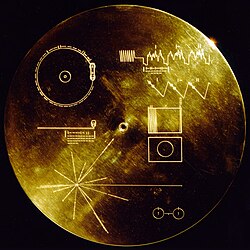
Voyager 1 carries a message from Earth — the famous Golden Record, filled with sounds, images, and greetings from our world. Its continued journey is not just a scientific mission but a testament to human curiosity and ingenuity. As Voyager 1 drifts ever farther into the cosmic sea, it remains a bridge between Earth and the unknown — a silent traveler still whispering secrets about the space beyond our solar system.