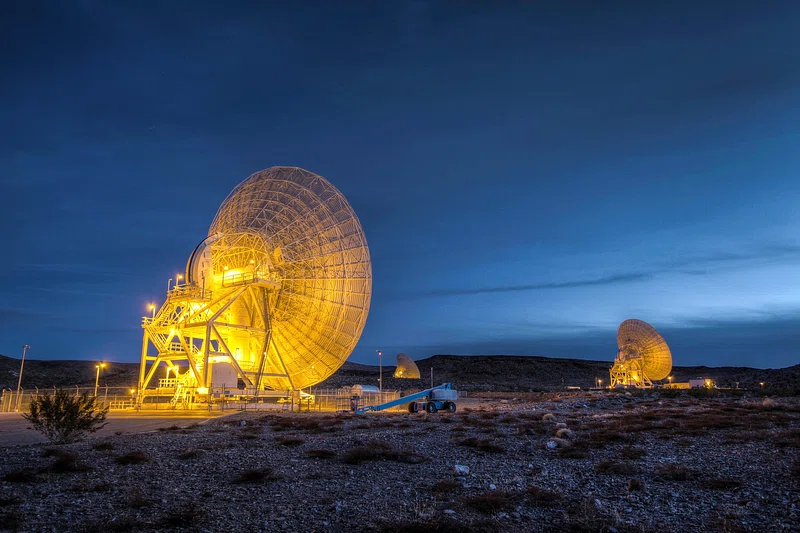
The Deep Space Network (DSN) is a global system of giant radio antennas operated by NASA that communicates with spacecraft traveling far beyond Earth.
It is essentially Earth’s interplanetary communication system, responsible for sending commands to spacecraft and receiving the faint signals they transmit back.
Where Is the DSN Located?
The DSN consists of three main complexes spaced roughly 120 degrees apart around the globe so that at least one station can “see” a spacecraft at any given time:
- Goldstone Deep Space Communications Complex – California, USA
- Madrid Deep Space Communications Complex – Spain
- Canberra Deep Space Communication Complex – Australia
Each site houses massive parabolic antennas, some as large as 70 meters (230 feet) in diameter.
How the DSN Works
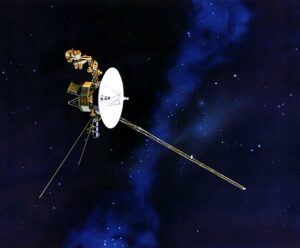
Spacecraft like Voyager 1 transmit radio signals using very low power. By the time those signals reach Earth, they are incredibly weak — often billions of times weaker than the energy needed to power a smartphone.
The DSN antennas:
- Capture the faint signal
- Amplify and filter it
- Convert it into digital data
- Send it to mission control for analysis
The network also sends commands back to spacecraft, guiding their operations millions — or even billions — of kilometers away.
Why the DSN Is So Important
Without the Deep Space Network, communication with spacecraft traveling beyond Earth orbit would simply not be possible.
Missions exploring Mars, Jupiter, Saturn, and the outer reaches of the solar system would have no way to receive commands or transmit their scientific discoveries back to Earth. Interstellar probes such as Voyager 1 would effectively fall silent, drifting through space without any connection to humanity. Despite rarely being in the spotlight, the DSN remains one of the most essential pieces of infrastructure supporting modern space exploration, quietly enabling every deep-space mission to function.